
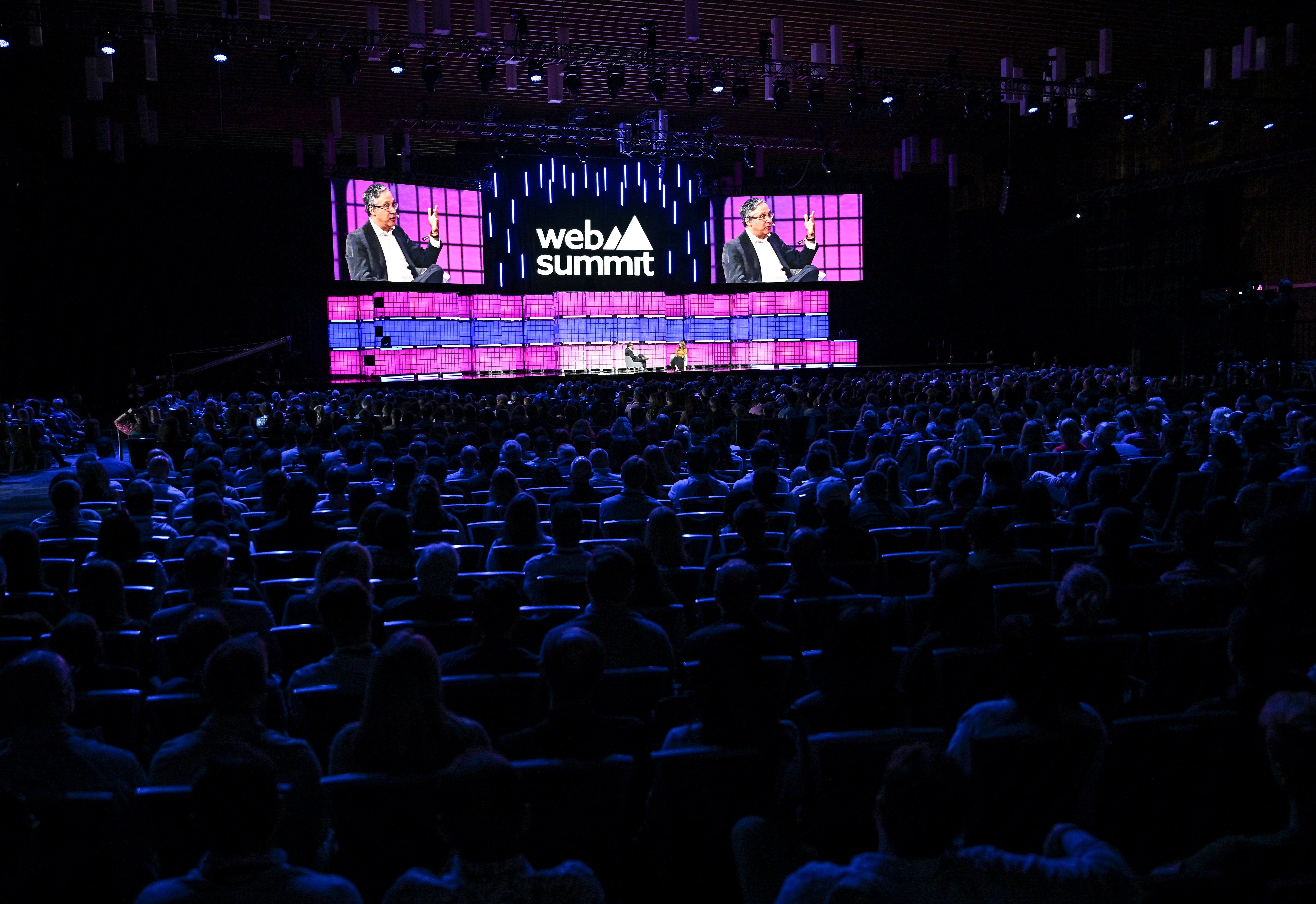
Last year, after Web Summit’s first Vancouver edition, I wrote that the conference still felt Canadian. That for a global event’s North American outpost, it had not quite grown into its stature. My advice, stated plainly, was that its north star for 2026 should be to feel more like the centre of the universe.
I went back this year. I still like the conference a great deal. But I think I gave it the wrong advice, and the reason why is more interesting than the advice itself.
First, credit where it is due
Web Summit Vancouver is, by every number it publishes, working. North of 20,000 attendees this year, up roughly 29%, with its largest investor turnout yet and well over a thousand startups. The team runs a genuinely well-oiled machine.
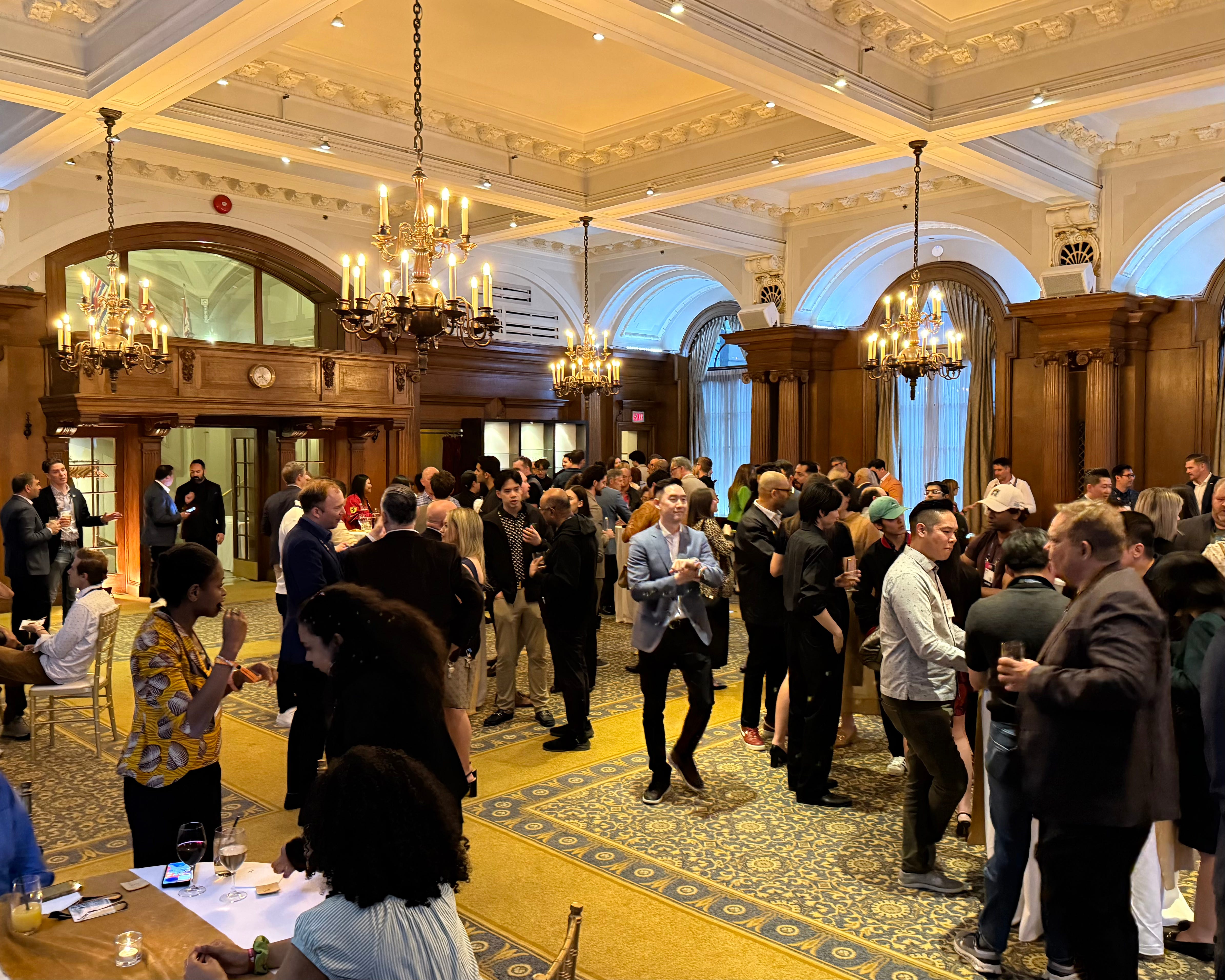
And I want to say the real positive thing clearly, because I mean it. Web Summit thinks big. It shows up in a city, plants a flag, and behaves as if that city is, for four days, the most important place in tech. In Canada especially, and honestly in a lot of places that are not San Francisco, the default setting is small thinking. Modest ambitions, modest framing, a quiet apology built into the pitch. Web Summit does not do that. A tech ecosystem that gets a regular dose of “act like you matter” is better for it, and I left genuinely energized. I even threw my own event during the week, an attempt to get founders, investors, and ecosystem people into a room to make something happen without being sold to every ninety seconds.
So this is not a piece about a conference that disappointed me. It is a piece about a tension I have been chewing on for a year, and Web Summit is simply the clearest example of one side of it.
The thing people do not think about: who funds the gathering
Here is something most attendees never consider, and I think it is worth thinking about.
A conference like Web Summit is not primarily funded by founders buying tickets. A major part of the business model is cities, provinces, countries, and corporates, all paying for space, pavilions, presence, and proximity. That is the engine underneath the event.
I do not mean that as a knock. It is just the mechanism, and once you see it, the shape of the whole conference makes sense. If your customers are governments and corporates buying presence, you build the thing they are buying: big stages, national pavilions, regional investment showcases, a marquee moment worth being photographed next to. The event optimizes for what funds it. Every event does. The regional bootcamps, the investment tours, the pavilions are not incidental. They are part of the value proposition.
This is what I would call a top-down model. The gathering is convened, and substantially paid for, from the top. And top-down is genuinely good at certain things. It creates scale fast. It manufactures ambition and gravity. It can put a city on the global map in a way no grassroots effort can match in the same timeframe. That is a real capability and Web Summit is excellent at it.
But it is one of two ways to gather an ecosystem, and the other one works completely differently.
The other shape
Last year at Startupfest in Montréal, I recorded a couple of relevant conversations that have stuck with me. I am publishing them alongside this piece because they describe the other model better than I can.
The first is with Ilias Benjelloun, a three-time founder and longtime community builder in the Montréal ecosystem. Ilias’s view is that the real energy in a tech ecosystem is bottom-up: the grassroots groups, the underground networks of builders, the people self-organizing without waiting for permission. He is not dismissing the organizations that support founders, he has helped build some of them. His point is narrower and it is about events: the gatherings that matter most are the ones that find those grassroots groups and back them, rather than staging something over the top of them.
The second is with Simran Kanda, who runs Elantech in Montréal, so she sees this from inside a small institution. Her observation is that as an ecosystem matures, it gets more structured and more professionalized, which helps the external image but quietly starves the human layer, the part where founders are actually nurtured rather than just networked. Her response was to build deliberately small, unstructured rooms: no cameras, no stakeholders, no service providers, sometimes literally a picnic or a sports afternoon. Her attendance rate is around 90%, because people show up for things that feel human.
Put their two views together and you get the bottom-up model. Not convened from the top and paid for by sponsors, but emerging from the people doing the work, distributed, human, a little messy, harder to photograph.
The tension: origination and acceleration
Here is the thing I actually want to name, and it is not “which model is better.” Both models are generative. They just generate different things.
Bottom-up is origination. It is where the actual material of an ecosystem gets made: the builders, the relationships, the trust, the companies themselves. It is slow, human, a little messy, and it does not photograph well. Ilias and Simran are describing origination. You cannot fake it and you cannot rush it.
Top-down is acceleration. It takes what an ecosystem has already originated and adds velocity to it: scale, capital, international attention, a centre of gravity, a stage. Web Summit is very good at acceleration. The 20,000 people, the 768 investors, the billions in tracked follow-on funding, that is real acceleration of real companies.
And here is the part worth sitting with. There is a reason the acceleration model is the one that attracts big money, and it is not glamour. It is legibility. A large corporate or a government can easily fund a top-down conference, because a conference has sponsorship tiers, pavilions, invoiceable line items, a procurement-shaped surface. Almost nobody can write that cheque to a grassroots picnic. There is no purchase order for origination. So acceleration events grow, because they can absorb institutional money, and origination events stay small, because they cannot. That is structural, not a judgement.
So the tension is not top-down versus bottom-up, and it is not which one is better. It is sequence. Origination tends to come first, and most of the money flows to acceleration. The interesting question for any gathering is which job it is actually doing, and whether it is honest with itself about which one that is.
Toronto Tech Week 2026
Which is what makes this week interesting, because Toronto Tech Week is happening right now, and it is a real world test of the bottom-up model.
Toronto Tech Week is mostly decentralized. It has one marquee event, called Homecoming, and then essentially nothing else is centralized. The rest is a sprawl of independently organized events across the city, closer to a startup open house than a conference. One anchor, everything else bottom-up.
And the shape of it is the interesting part. Toronto Tech Week is almost pure origination: three hundred-odd events, run by the city’s own people, scattered across the city, with one piece of acceleration, Homecoming, placed in the middle. It is the bottom-up model at full scale.
Here is the question I am actually focusing on into the week. Web Summit’s core asset is a building. The convention centre is the product as much as the programming, because proximity is what creates the accidental collisions (not ironically the original name of the conference itself: Collision), the hallway conversation, the person you did not plan to meet. Toronto Tech Week, by design, has no building. No central hub, no floor, no single meeting point. Three hundred events and no central location… creating a different kind of serendipity.
So the open question is whether origination at that scale holds together without a centre. Does a week with no hallway still produce sparks, or do you only ever meet the people you already planned to meet? This is not year one, it ran last year and it is back, so it clearly works well enough to recur. The real test is what happens as it grows. A no-hub model that is charming at small scale either scales gracefully because it was never dependent on a room, or it slowly thins out into three hundred disconnected calendar invites.
I have thoughts on that already, having spent the week in it. I will put them in next Wednesday’s piece.