
Before we get into it, I sat down with Dan Blumberg at SXSW to talk about what actually lasts in the AI era. His show just won a 2026 Webby, which I think makes Decelerator officially "Webby adjacent." Worth a listen, then read on for the longer take.
Listen on: Spotify | Apple Podcasts | Your Podcast App
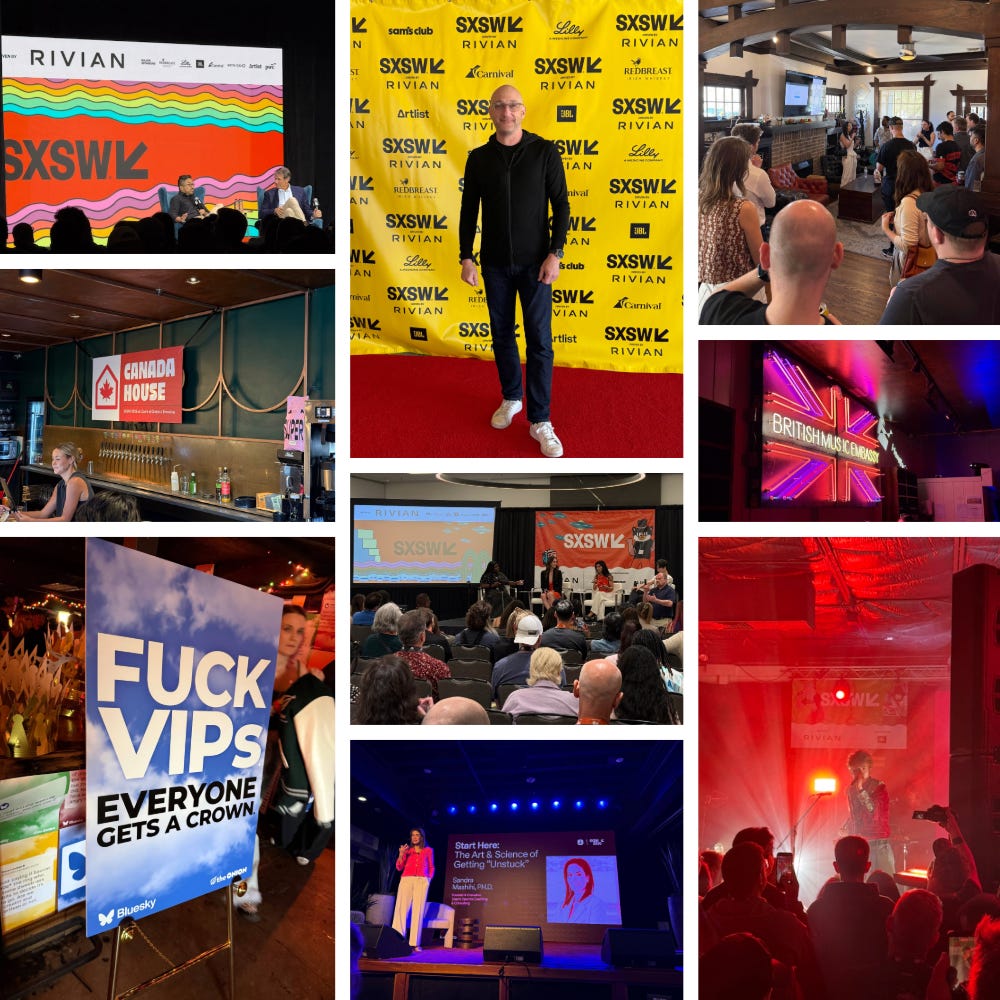
I’ve been a SXSW Pitch judge for two years now, and this year I noticed something running underneath almost every conversation I had - about AI, about music, about self-driving cars - worth naming.
Everybody on every panel and stage was talking about trust. Trust is the new moat. Trust is the new differentiator. Trust trust trust. Fine. But “trust” is doing so much work right now that it’s starting to mean nothing, which I think is a bit of a problem when you’re trying to build something. So let me try a more useful word: receipts.
When everyone has the same tools and the output is cheap to produce, what’s left is the trail behind the output. The reasoning, the track record, the proof, the why. The stuff that’s actually hard to fake.
Let me show you what I mean with a three act vignette.
The Kids Are Buying CDs
I was having fried chicken at Gus’s, and, over the inability to make eye contact with our server, started chatting with a chap who does strategy at Universal Music and negotiates the deals with the streaming companies. He told me that kids these days (👴🏻) are now buying… CDs and CD players. They’re cheap, you have ownership over the media (inasmuch as one can), they’re tangible, and… no screens, no algorithm deciding what’s next.
This stuck with me because it’s not really about CDs. It’s about the fact that the streaming model asks you to take everything on faith: that the song will still be there next week, that your subscription will still exist, that Amazon won’t take the book away, that the playlist hasn’t been quietly reordered for reasons the algorithm doesn’t owe you. A CD is a receipt. You can hold it. It’s evidence that a transaction happened and that a thing exists and will continue to exist whether or not a Series C startup decides to pivot.
That’s a weirdly old-school thing for a kid to want, but I get it.
The Fart App Era Grows Up
Last year at SXSW, my take was that AI felt like the early iPhone App Store: experimentation, novelty, fart apps, nobody quite sure what the platform could really do. This year the panels and the parties had moved on. The question now is: now that everyone can build with AI, what actually lasts?
The creator economy tracks were saturated with this anxiety. Everyone is talking about authenticity. And I’ll be honest. I’m sick of the word. It’s started to sound… inauthentic. (How fitting). But underneath the buzzword is a real thing, which is that when AI commoditizes the tools and increasingly the content itself, what differentiates a creator is not what they made this week but the trail behind them. The point of view they’ve held over time. The takes they got right. The takes they got wrong and admitted to. The reps. The receipts.
Your audience isn’t buying the post. They’re buying you, and the only way they can do that is by looking at the trail.
WayMo Or Less
I took my first Waymo. Genuinely impressive. Quick tip: sit in the front. No awkward passenger energy, and you control the radio and the temperature.
The car won’t make u-turns. It won’t do 31 in a 30. It won’t cut through an alley even if it would obviously be faster. Which makes sense… you can’t program in “just do whatever makes sense” if you ever want any of these decisions to hold up in court. So maybe the machines are safer but not faster. Or maybe I lived in NYC for too long.
What was harder to accept were the unexplained moments. It dropped me off on the wrong side of a highway - twice - without saying a word. My hunch is that the car won’t drop you off next to your destination if there’s any hint of an illegal stop or blocking right-of-way, so it just… didn’t. It backed up at a red light to make room for a truck behind it, which is polite but genuinely alarming when you don’t see it coming and your stomach tells you the car is misbehaving.
The fix isn’t complicated, and it’s the same thing the CDs and the creator economy stuff is about: tell me what you’re doing and why. Give me the receipt in real time. The technology earned my respect on the first ride. It hasn’t quite earned my trust yet, and the gap between those two things is exactly the thing I’m trying to name. Waymo has the capability. What it’s not giving me is the receipt.
Trust, Built From Receipts
So that’s the thing I keep coming back to. Trust is real, but it’s the conclusion. Receipts are the mechanism. When the tools are cheap and everyone can produce the output, the differentiator is the evidence behind the output. The reasoning behind the take, the track record behind the brand, the explanation behind the decision the robot just made.
I think this is a useful frame for anyone building right now, because it tells you where to invest. Not in more capability - that’s a commodity - but in the trail. The receipts. The stuff that takes time and can’t be faked, which is, conveniently, the stuff AI is worst at.
What’s your take?
In the meantime, here’s what a Waymo’s like from the driver’s POV.