
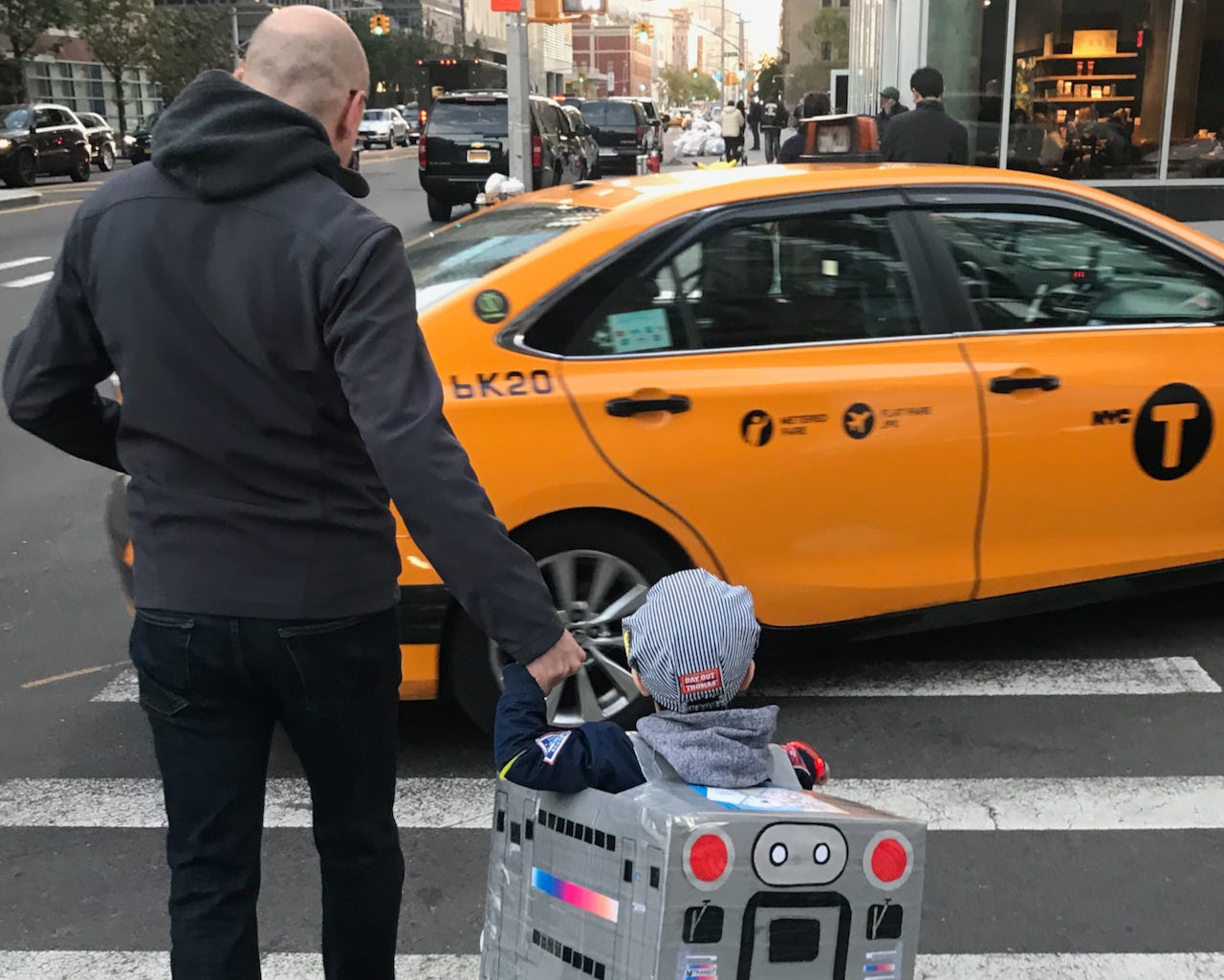
When I lived in New York in 2017, you could eat and get around one of the most expensive cities on earth more or less for free, courtesy of venture capital. Uber would carry me across Manhattan for the price of a coffee, the meal kit companies were mailing out a week of dinners for less than it cost them to box the dinners up, and half the apps on my phone were quietly underwritten by funds that had decided growth was the only number worth chasing (profit being a problem for a later, more boring version of the company). If you sequenced your free trials carefully, you could live in Manhattan for a month or two at roughly the price of Cleveland.
Then the bill arrived. Not all at once, and yes, a pandemic smudged the timeline, but it arrived. An Uber now costs what a cab costs, sometimes more, and the delivery apps stack a service fee on a delivery fee on a tip prompt that opens at 20%. The free decade turned out to be a loan, with repayment terms nobody read: once the competition was starved out, you and I would pay the real price, plus margin.
I bring this up because we just speedran the same cycle with AI, except Uber needed fifteen years to get from subsidy to invoice and this version did it in three (effectively). The most private capital ever raised went into subsidizing the product, doing the land grab, and leaving the economics for later, when they would be somebody else’s problem.
And then, over the last few weeks especially, the vibe changed (pun intended). While per-token prices mostly did not go up (a lot of them have actually come down), what ended was the not-counting. Sam Altman is calling cost one of the biggest themes in AI right now; case in point: Microsoft has started cancelling Claude Code licenses. There is even a word for the behaviour that got everyone here, tokenmaxxing, and the moment a behaviour gets a name, you know something’s going to happen.
The why is not complicated: these companies are heading to the public markets. Anthropic filed confidentially on June 1, fresh off a funding round at a $965 billion valuation, and OpenAI filed a week later, and public markets do not accept a subscriber chart as an answer (unless you’re Jeff Bezos). At some point a person in a suit asks when you intend to make money. The subsidy phase ends because it has to.
But the subsidy was never just money. ChatGPT trained the entire world to use these things conversationally. Ask, refine, rephrase, try again, keep talking until the answer comes out the right shape. That’s a great way to work when someone else is paying for your tokens. The subsidy was an AI product retention muscle: no price signal ever told anyone to stop, so an entire generation of users and companies learned habits that only make sense while the tool is free. The money has now stopped and the habits have not. Uber found this out when its engineers, handed AI coding tools with no spending caps, ran up bills of $500 to $2,000 a month each, and the company (yes, the same one that once paid for my rides across Manhattan) torched its entire annual AI budget in four months and went, in its own CTO’s words, back to the drawing board.
This is also where the Uber analogy stops working. When Uber’s subsidy ended, the underlying thing (a man in a black Camry driving you home as a non-employee) cost roughly what it had always cost, and prices drifted back to taxi levels. With AI the expense is welded into the technology itself, at least for now. Every answer burns compute, and the price floor is electricity plus Nvidia’s margins. So when the land grab ends, there is no taxi fare for the price to drift back to.
A senior engineer costs, say, $200,000 a year and the tokens cost $2,000 a month, and you can see why boards get ideas (AI is now a stated reason for layoffs, and occasionally the polite cover story for cuts that were coming anyway). At the early stage of a company, the substitution is genuinely happening: startups are shipping with three people what used to take ten, mostly by never hiring the other seven. But inside companies that already have engineers, the pattern is additive, the $200K engineer plus the $2,000 of tokens on top, and the return is velocity, which I do believe in, and which is also hard to put on an invoice. So these tools are cheap to experiment with and expensive at scale, and the industry spent two years in experimentation mode while talking like it had solved the scale economics.
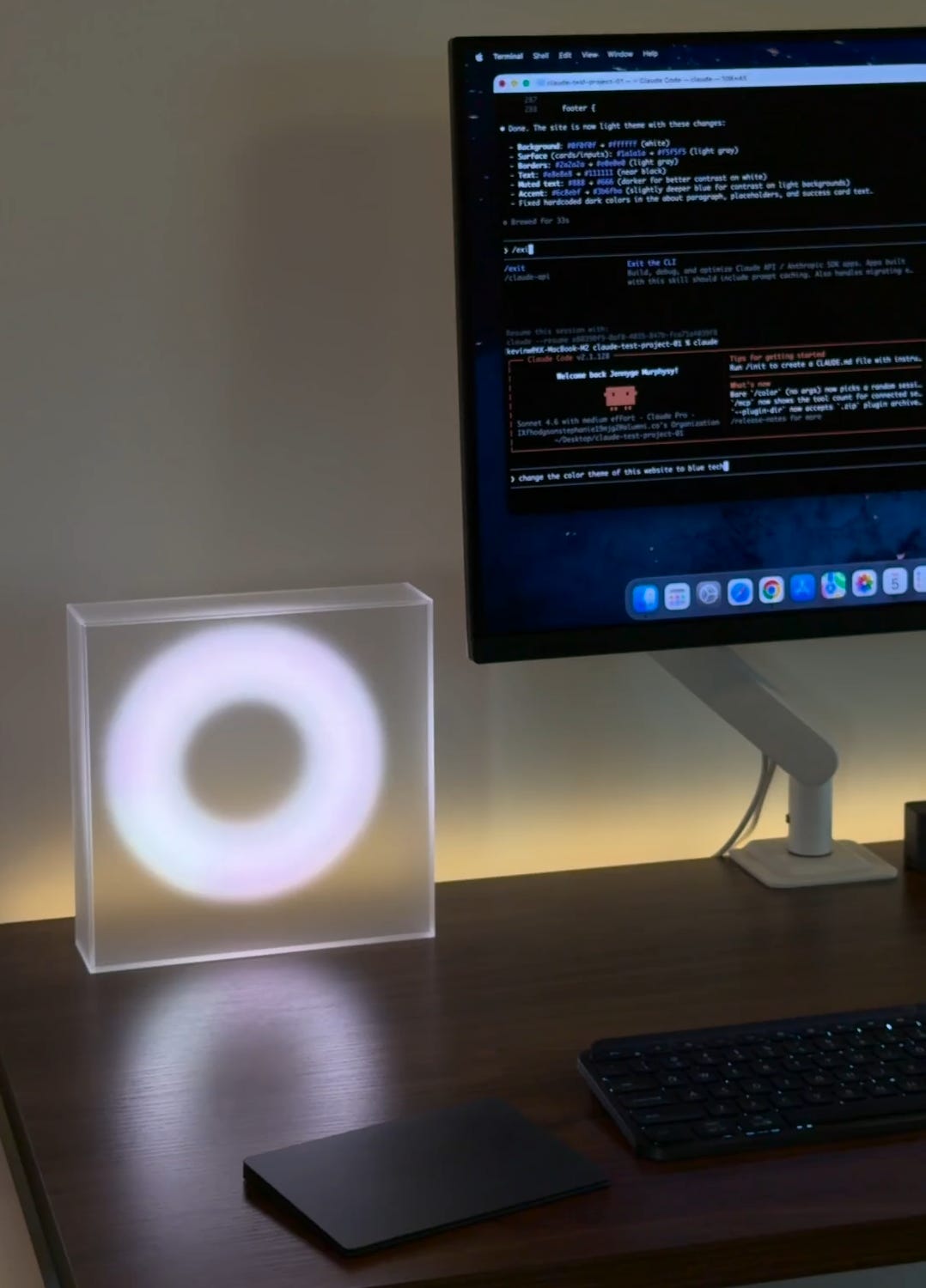
I should say that I am an optimist and am very, very excited about all of this, and not in the contractually-obligated-newsletter-writer way. You really can build software at a speed and scale that was science fiction three years ago, solve net new things, and come up with discoveries and products that never could exist until now. But “you can do more” and “you should do all of it, constantly, at maximum settings” are different claims, and the bill is finally going to force everyone to tell them apart, maybe sooner than we all would have liked.
For one thing, we will not get rid of developers. The demos imply you just describe what you want, and the tools are far more temperamental than that. The genuinely hard skill was never the typing. It was understanding a business problem well enough to translate it into something a machine will do reliably, and that is still a skill, and it still mostly lives in the domain of developers.
And the work itself has inverted in a way I do not think we have fully grokked. The old way, you sat with a machine that did exactly what you told it and nothing else, and you tried to think through every case: what if the field is empty? what if two things happen at the same time? Miss a use case and you’ve got a bug, which was tedious but knowable. Building with AI is the opposite exercise. You are not building a machine where you thought through all the use cases, you are wrapping your arms around something that wants to do everything and you’re trying to stop it from doing anything except the thing you actually asked for. You are negotiating with a probabilistic thing and hoping the guardrails hold, which is a brand new discipline, and one that takes more judgment per problem, not less. The negotiation also runs on the meter: ask, refine, rephrase, try again was a great way to work when the tokens were free, and now every round of it costs money.
It is also why I have started saying, half as a joke, that English just became a fifth-generation programming language. We spent seventy years climbing a ladder of abstraction, machine code to assembly to languages that read like math to languages that read like instructions, each rung letting you say more while typing less. The next rung up turns out to be a paragraph of plain (or maybe caveman) English handed to a model that generates every layer underneath. Which is great, and kind of ironic given how imprecise English is, because we are about to find out what imprecision costs when every vague sentence is billed by the token.
My guess about where this settles comes from an interview I did years ago with Christian Weedbrook, founder of Xanadu, the recently IPOed quantum computing company. His pitch for quantum was never “replace your computers.” It was: run your boring workloads on boring cloud, and when you genuinely need a protein folded, call the quantum API, pay the eye-watering rate, and hang up. I suspect software built alongside AI matures into something similar. Not AI as the substrate for everything, but AI as the expensive specialist you call when it is actually the right tool, surrounded by cheap deterministic code doing the parts that never needed a genius.
The capability is real and the bill is real, and they arrived in the wrong order: we started paying grown-up money before doing the unglamorous work of figuring out what the thing is actually for. So the interesting question for the next couple of years is not whether AI makes you faster, because it does. It is whether we can develop the taste to know when the expensive tool earns its keep and when it stays in the drawer, before the invoice figures it out for us.
If you have already figured it all out, hit reply. Unlike everything else in this piece, replies are still free.